

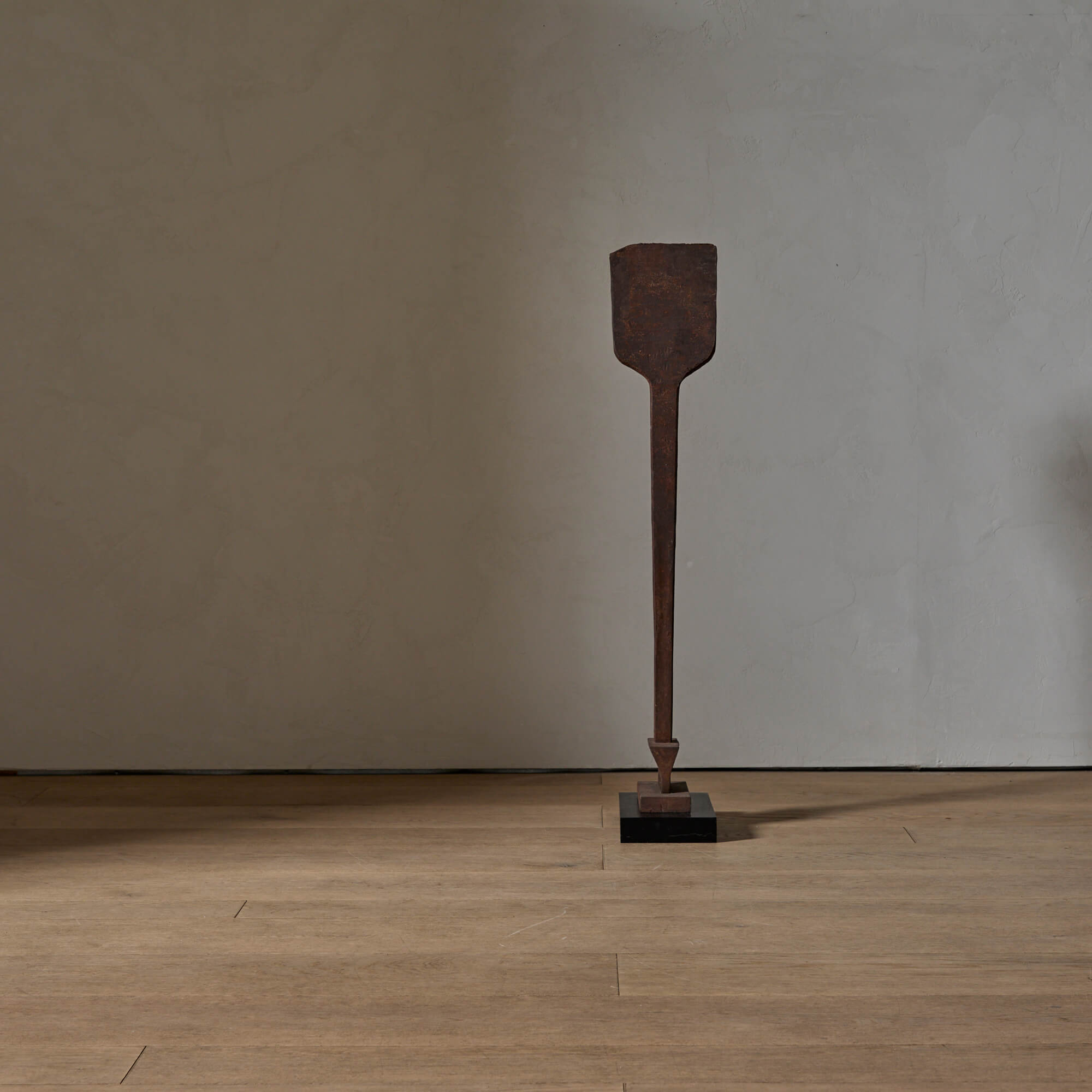
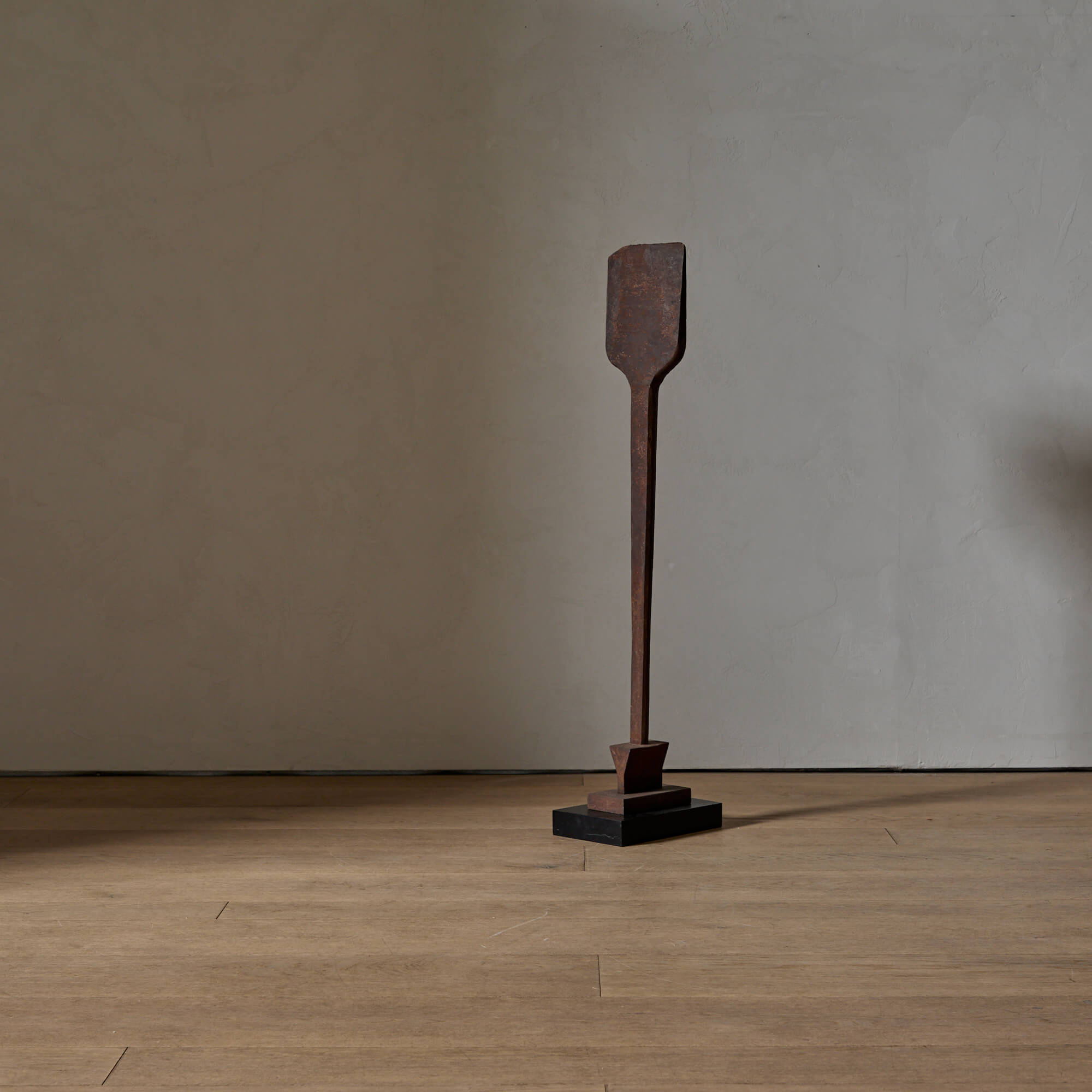
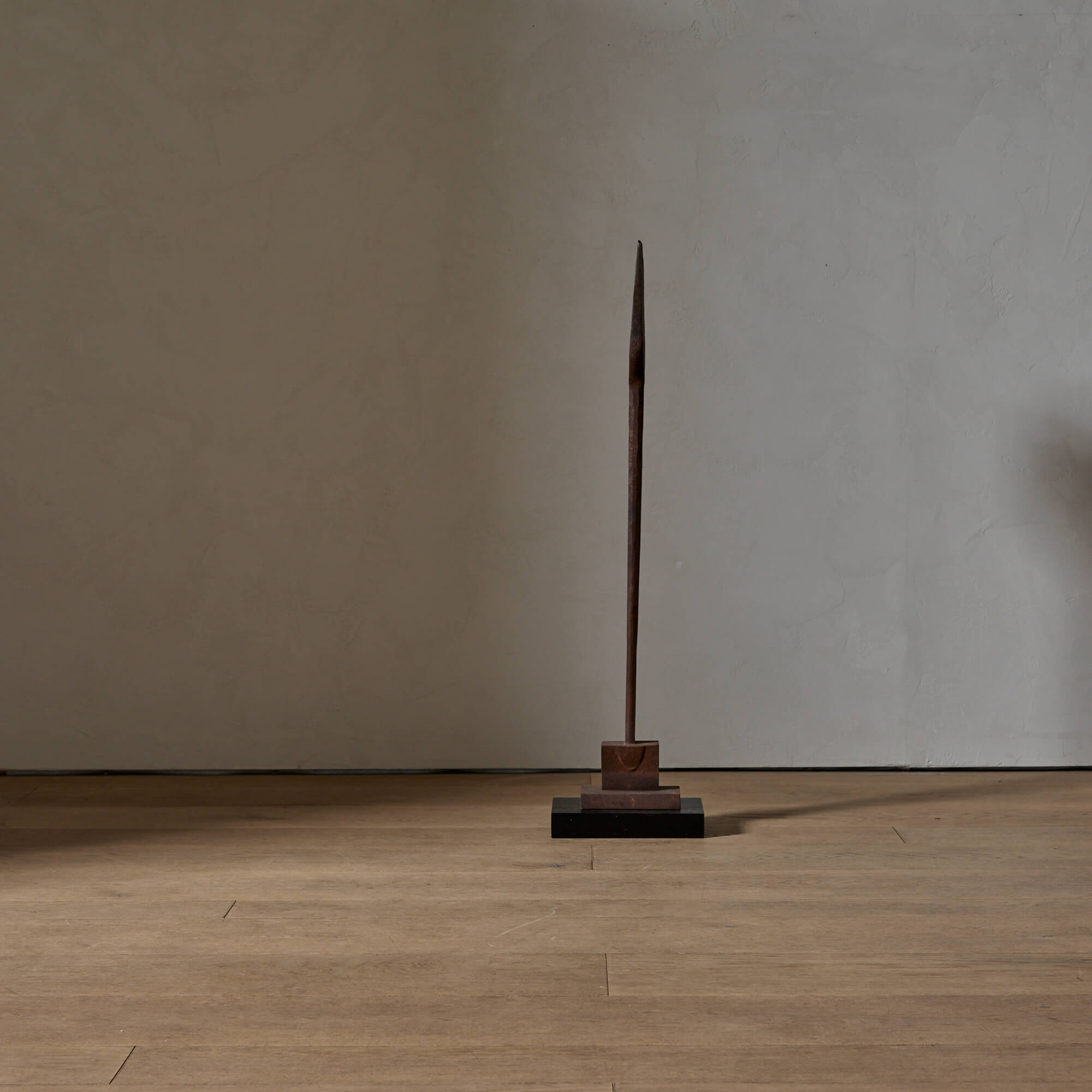
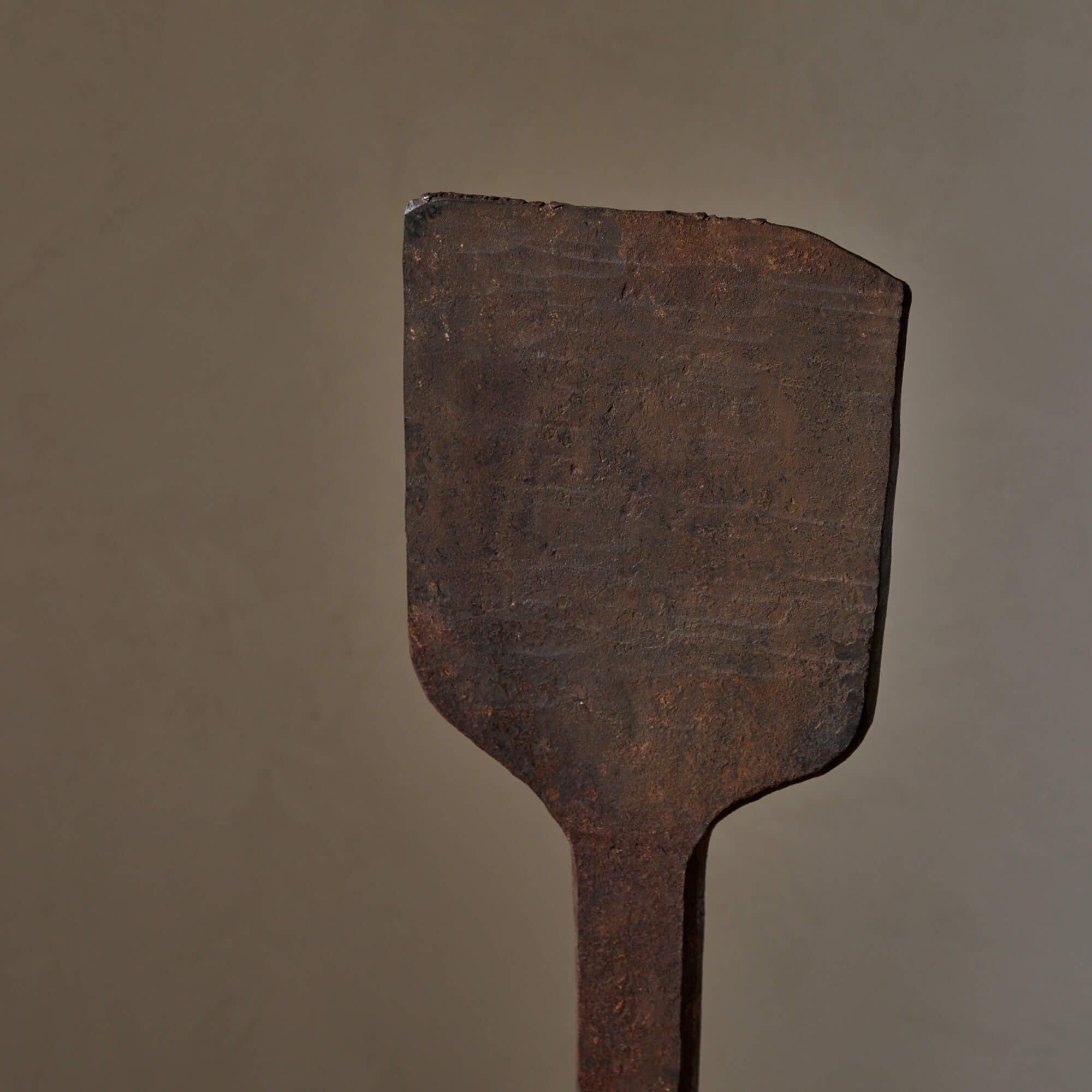
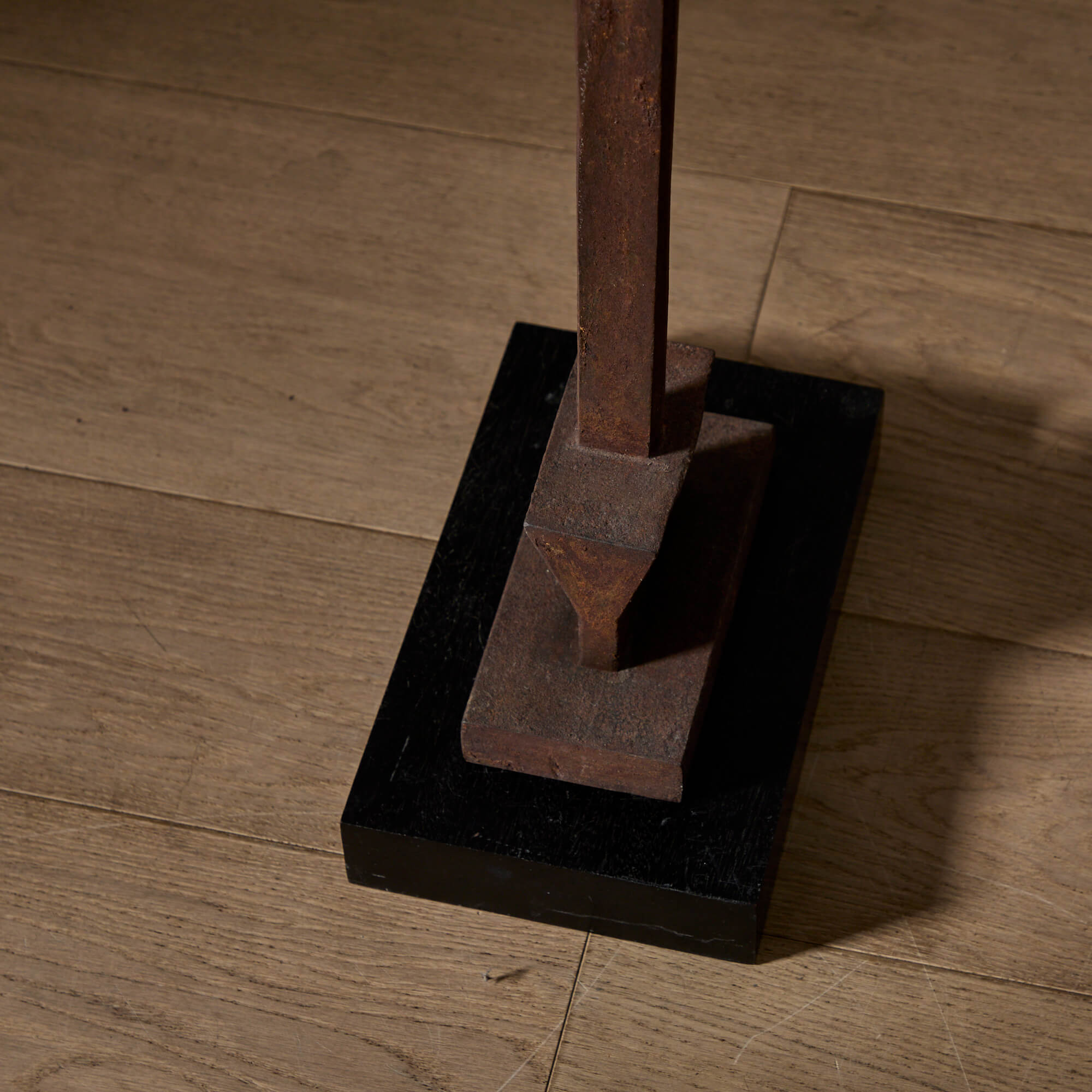
Untitled Sculpture by Beverly Pepper
Untitled
Cast and Welded Iron
44 1/2″ high
“Painting never gave me the same feeling of sculpting: I prefer the fight.” Beverly Pepper
Beverly Pepper (1922-2020) was born Beverly Stoll, and raised in Brooklyn, NY, where she attended Pratt before landing a job as an art director at an advertising agency. Finding her office work unfulfilling, she began taking night classes in studio art before moving in the late 1940s to Paris, where she studied painting with André Lhote and Fernand Léger, before eventually moving to Rome.
In 1960, she experienced a revelation during a trip to Angkor Wat with her young daughter (who would grow up to become the Pulitzer Prize-winning poet, Jorie Graham) which changed the course of her career. In awe of the temple ruins, she was inspired to set aside her brushes and palette, and take up sculpture full-time.
Only two years later, she was invited to participate in an exhibition in Spoleto, Italy, alongside Alexander Calder, Henry Moore, and David Smith (who gave her early lessons in welding). Pepper became the pioneering female artist in the male-dominated world of monumental metal sculpture. She later admitted that at the start of her sculpture career she had to lie about being able to weld, in order to convince the men in a local steel plant to teach her industrial methods. From that point forward, Pepper became a master artist in iron, stone, and Cor-Ten steel.
She exhibited throughout Europe and in the United States, creating sculpture small and large. In the last years of her life, she completed two of her most significant projects: the Beverly Pepper Sculpture Park in Todi (where she lived and worked) and the 1,800-seat Amphitheater in L’Aquila, Italy. Her works are in a number of museum collections, including the Metropolitan Museum of Art, the Whitney Museum of American Art, the Barcelona Museum of Modern Art, the Galleria Nazionale d’Arte Moderna in Rome, and the Centre Pompidou.
Though she received a number of honors and awards during her lifetime in Europe, her work seems to be finding a new audience today in her country of origin.
The Beverly Pepper Foundation dates this sculpture to the period of 1979-1980.
It was previously in the collection of the renowned Vogue magazine editor, Grace Mirabella.